Total Pageviews

Sunday, 24 August 2014

Fact 33. Gerald Thomas directed all 31 'Carry on' films.

Gerald Thomas was born in Hull and studied medicine at Bristol and London. During the war he joined the Royal Sussex Regiment and served in Europe and the Middle East. After being de-mobbed he decided not to return to medicine and entered the film industry as an Editor at Denham Studios. He had several credits on films. His older brother Ralph was also in the industry and he worked with a producer called Peter Rodgers. Gerald worked in the cutting room with Peter's wife Betty and through her we learned that Gerald wanted to become a director. Peter decided to back him.

Gerald Thomas.

Their first film took a year to set up but finally in 1956 'Circus Friends' was released for the Children's Film Foundation. After several more films in 1958 they obtained a straight drama script call 'Bull Boys' about a concert ballet dancer whose boyfriend was called up on the day they were to be married. It was re-scripted and renamed and became 'Carry on Sergeant'.

Carry On Sergeant.jpg
Film poster for Carry on Sergeant.

They spotted the potential of the film and soon they were making 3 a year, then two and then, in the 1970's 1. In total they made 31 'Carry On' films. The films were low budget and financed entirely with British money. Each film only took about six weeks to film and very really did Thomas over run. He ran a very relaxed atmosphere on set and was thought of as a father like figure for the cast and crew. He was master of improvisation for film locations using Welsh gates as the border on the Khyber Pass and sand dunes on the south coast for desert scenes. He also had a good sense of fun such as replacing water in a glass with gin.

Fun on the set.

Love them or hate them they made a fortune for the films distributors and made millionaires out of Peter Rodgers and Gerald Thomas. Thomas died on 9th November 1993 in Beaconsfield.

Sunday, 17 August 2014

Fact 32. The oldest secular building in Hull.

Other than churches The Old Grammar School South Church Side, just by Trinity Square is the oldest. It was built in 1583 as a school.

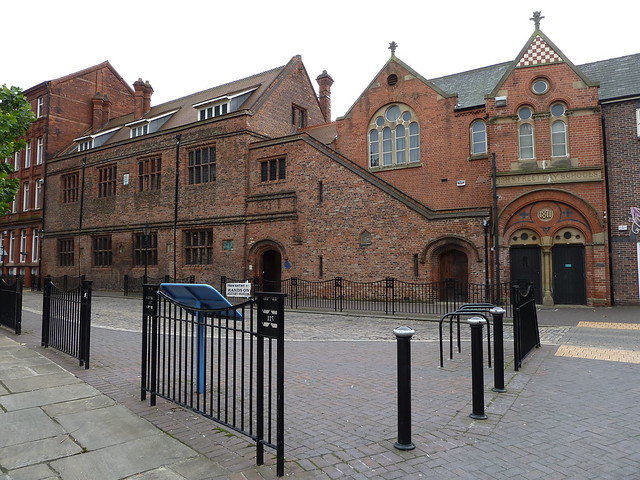
Old Grammar School from Trinity Square. On the right is the Fish Street Day School that was a charity school built in 1871 by the Church of England but was soon taken over as a Board School. The Hands on History Museum extended into this building too.

Hull Grammar School was actually the sevententh oldest independent school in the UK started in 1330. It was endowed in 1486 by Dr. John Alcock who later became the Bishop of Worcester (also Rochester and Ely at different times), then the Lord Chancellor and the founder of Jesus College, Cambridge. The original school was closed down by James VI when he ceased the revenues of charities. The people of Hull did not like this and had the new school built in 1583-5. The cost of the new building was £600. Alderman William Gee was a big benefactor giving £80 and 20,000 bricks plus the income from two properties in Hull. The Corporation also contributed and so a second floor was added this was used as an assembly room and exchange and a meeting place for the Merchant Adventurers of Hull. The second floor remained for other uses until 1706 when the school took it over. The school remained until 1878 when it needed larger premises. The building was then purchased in 1884 to be used as the Holy Trinity Choir School. After this a third floor was added for curates accommodation.

Interior whilst a museum.

Whilst the Grammar School was in this location Andrew Marvel, the poet and patriot, and William Wilberforce, the MP and reformer were pupils. In fact Andrew Marvel's father was the head teacher too. There is a Blue Plaque on the wall with information. In 1988 the school became a  Hands on History Museum. It has recently closed as a money saving exercise. 


[11744] Old Grammar School
Plaques on the walls of the Old Grammar School.

This is another building that would provide a central venue for recitals, talks and other more intimate occasions during the Year of Culture.

Sunday, 10 August 2014

Fact 31. Springhead waterworks.


Hull is built on very low laying land next to an estuary so water has always had to be sourced from away from the town. There were several springs to the west of the town and these were linked to the town walls by building dykes. There was always trouble with the landowners as the drainage from elsewhere had to be blocked to prevent pollution of the water, and also from ingress from inundation from the estuary. In 1376 another source was to be opened up nearby and this was from Julians's Well and the dyke Julian's Dyke but also Derringham Dike. This was the springs at Springhead. In 1449 North Ferriby Priory gave permission to lay pipes from the spring to close to the town walls. Lead pipes were used. The system was maintained until 1461 when something must have happened as the corporation ordered the lead to dug up and sold and it was back to supply by ditches. A limited supply by pipe was started again in 1613 and this did develop but never covered the old town never mind the ever increasing land area and population as the Town grew. A lot of water was carried from the springs in water carts to the houses etc.

In 1843 the need for water had grown and an Act of Parliament was obtained to draw water from the River Hull from the bend near Clough Road and the Stoneferry waterworks opened in 1845. The water was of questionable quality and after a cholera outbreak in 1849 the possible supply from the springs were turned to. Engineers re-looked at Springhead and concluded that it couldn't supply the shortfall. However a local man William Warren offered to supply 5 million gals. of water a day from the Springhead wells, and the Town Corporation accepted his offer. He drilled a new well and started supply as before with 4.5 million gals. Springhead waterworks were built to increase the rate and started a pumped supply of water in 1862. 


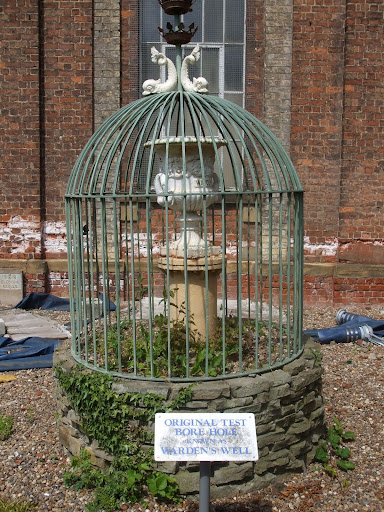
The original bore hole made by William Warden to test the possible supply rate.


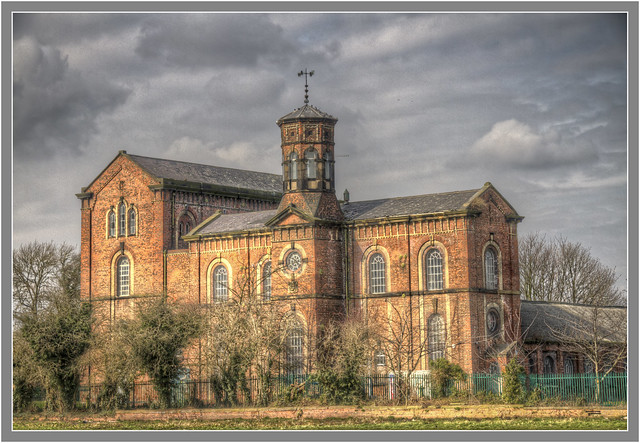
The Springhead Waterworks. Built of red brick with white brick details. The original building is that nearest the camera with the octagonal lantern above the enclosed external staircase. The three story building was added in 1876 to house a It was built to enclose a 40t Cornish beam engine that was called the Woodhouse Engine.

Cornish beam engine, Springhead
The Woodhouse Engine increased the supply of water to 6.75 million gals. a day. Further pumps were added and other buildings added. In 1884 the Jackson's Fountain pump was added to increase the flow by up to 4 million gals. a day. The Bowling engine was also added to add 7 million gals a day. I believe the photo above is of the Jackson Fountain Pump. The Woodhouse pump may have been decommissioned in 1910. The Jackson Fountain Pump was last used in 1952. The beam was supported on Doric arches.


The tall chimney was knocked down around 1956 as it was no longer required.


In 1957 the Waterworks were fully up dated to electric pumps and these were the generators supplying the electricity.


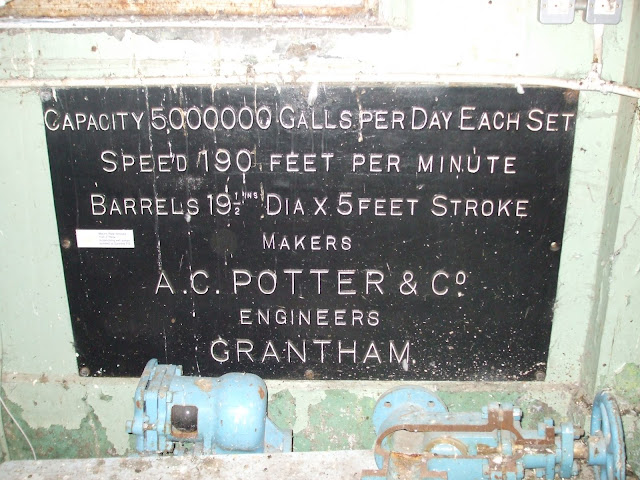
The details of the Jackson Fountain pump.

After the waterworks became redundant it became a Water Museum and the buildings and engines were part of the display. The buildings made a fantastic space and it was a real shame when the museum closed again. Wouldn't it be nice to have the place open again for use as a venue for music and community plays etc for the year of the City of Culture and then leave a lasting monument to the past that can be used today and in the future.

Sunday, 3 August 2014

Fact 30. Airship R38 crashed over the Humber near Hull.

Towards the end of the First World War the Admiralty ordered a Class of Airships that they required to patrol over the North Sea and provide convey protection. Four almost identical ships were envisaged. The first was to be R38. It was designed in house by the Admiralty and the contract for construction was won by Short Brothers in 1918. Due to the end of War the following three airships were cancelled and the R38 was also cancelled but after four months reinstated. As the airship base at Cardington in Bedfordshire had been nationalised it was to be built there and construction started in February 1919. The R38 was saved from cancellation as the project had been sold to the USA who wanted to to build up a fleet of airships. The price was to $2,500,000. 

Plans for R38.

The specification was to be 695' long, 84' in diameter with a volume of 2700,000 cu ft providing a lift of 84 tons. She was powered by 6 engines that gave a max. speed of 71 mph. Here range was to be 6500 miles, 10500 at cruising speed. Maximum ceiling was to be 22,000 ft. She was designed to carry a 1lb gun with 24 machine guns in pairs and load 4 x 520lb and 8 x 230lb bombs, although these were never fitted.

Construction was finally completed on 7th June 1921. There had been no time to change the registration from R38 to the American ZR-2 but did have the US Insignia. The change was completed at Howden air base. The maiden flight was 23rd June 1921. She was the largest airship in the world at the time of her first flight.

Leaving for maiden flight.

There was a joint crew of British and Americans to carry out the trials and familiarisation prior to the deliver to America. During the first flight they discovered some trimming problems during a seven hour flight. The second flight was on 27th June and the trimming problems remained so they decided to reduce the size of the control surfaces. 

R38 being man handled out of her hanger. ZR 2 can faintly be seen on the airship so I assume that this is at Howden after she had been painted. The hanger also looks the same as the lower photo which is Howden.

The third flight took place on 17th July and was to be to Howden airship base to the west of Hull via the North Sea. However when the speed was increased to 58mph the airship started to pitch through about 500 ft. Speed was reduced and she headed for Howden. It was found that several girders around the midships engines had failed.

R38/ZR2 in the hanger at Howden.

Poor weather meant that the next flight didn't take place until 23rd August The plan was to fly to Pulham airbase in Norfolk to carry out trials for mooring to a mast as Howden did not have one. The amount of trials were going to be reduced to speed things along so they would also be loading stores for the flight over the Atlantic to the USA after hand over. When they arrived they could not land as there was low cloud/fog so she went out over the North Sea. There was still fog the next morning so it was decided to return to Howden and carry out further trials on the way. The first trial was full speed trials and they achieved 71.9 mph. This was followed by turning trials. At the time they were at 2000 ft over the Humber Estuary just off shore from Hull Pier with thousands watching. Speed was reduced to 60 mph and the turns started. at 1737 on 24th August 1921 the crowds noticed the airship buckle in the middle and then the ends start to droop. Shortly afterwards a fire started in the forward end followed by a huge explosion that broke windows over a large area of Hull. The remains landed in the estuary. The trial crew consisted of 17 Americans and 32 British. 1 American and 4 British survived and and they were all pulled out of the water from the after section.


The wreck on the sand banks off Hull when the tide went out.

Salvage operations on the after section.

The inquiry soon afterwards found that the disaster was caused by structural failure and left it at that. R38 had been built much stronger than the previous L71 but was designed to be able to turn at high speed where as L71 was much slower. That would infer that the stresses caused by the turn had overstressed the girder system causing the collapse and escape of gas and explosion.

There is a memorial to the R38 disaster in the Western Cemetery in Hull.

Sunday, 27 July 2014

Fact 29. Actor John Alderton grew up in Hull.

John Alderton was actually born in Gainsborough in Lincolnshire but moved to Hull with his family and attended Kingston High School. The general public first became aware of his talents when he got a good part in Emergency, Ward 10. Where he played Doctor Moone, which must have been the first medical soap in the UK. He actually married his co-star Jill Brown but it only lasted a few years. Emergency, Ward 10 ran from 1957 to 1967.

John Alderton in Emergency, Ward 10.

He then got the lead part in Please Sir! as Mr Hedges. The series ran from 1968 to 72. He also played the part in the feature film of the same name. At this time he married Pauline Collins
John Alderton in Please Sit!

Later in 1972 he had a new comedy sitcom with Hannah Gordon called My Wife Next door. It ran for 13 episodes and it won him a Jacob's Award. His next success was massive as he appeared as the chauffeur in Upstairs Downstairs with his wife having a part too. The series ran from 1971 to 75 ans several spin offs came from it for him. He and his wife had three children, and a step daughter. He also starred in It shouldn't happen to a vet.  from the book by James Herriot. 

John Alderton in Upstairs Downstairs.

More recently he was the voice of Fireman Sam, the very successful children's cartoon that everybody of a certain age will have got to know by heart as their kids watched it over and over again! He also appeared in the very successful British Film Calendar Girls. He has often worked with his wife

Fireman Sam.

He has recently been in the news for fighting planning application near his home in Hampsted that wanted to knock old homes down and rebuild futuristic building of a much larger size and with a swimming pool underground. He actually won the case.

John Alderton in 2012.

Sunday, 20 July 2014

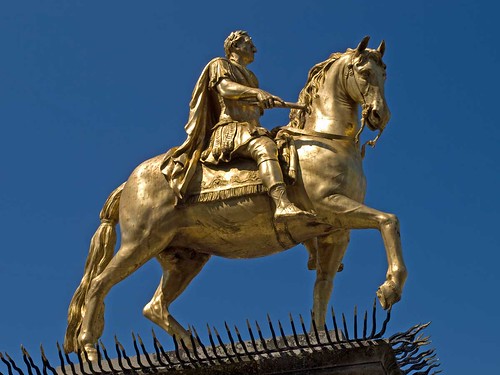
Fact 28. The most impressive equestrian statue in Britain.

King Billy, as the statue is affectionately know, sits in the centre of the road of Low Gate in Hull. The place was actually where the bear baiting ring was in previous times. The statue is of King William III, William of Orange. Hull was the first large city in Britain to swear their allegiance to the new King when he deposed James II in 1685. This came about as Parliament thought that James was to change the state religion to Catholic and they wanted to remain Protestant. Williams mother, Mary, was daughter of Charles I and then William had married Mary,  his first cousin and eldest surviving daughter of James II, when he was the Duke of York. She was therefore the next in line to the throne after James II. William refused however to be consort to Queen Mary or only as King during her lifetime and threatened to leave the country. Parliament thought it better to have a Protestant King and so it was the connivance of the Houses of Lords and Commons that declared them joint Rulers but William would exercise the regal power for both of them. They were crowned in April 1689. He died in 1702.

William III and Mary II of England, Scotland and Ireland

The statue was paid for by public suscription and cost £785. Today this would be around £150,000. It was designed by a Dutchman Peter Scheemaker in 1734 and sits on a stone pedestal. The Statue is of William in Roman Emperor costume astride a horse. The statue was gilded in 1768. The Inscription reads; " This statue was erected in the year 1734 to the memory of King William Third. Our Great Deliverer."


Statue of King Billy in Low Gate in late 1800's as there are no toilets but the fountain and lamps are there.

The inscription on the plinth with the water fountain below that no longer is working.

In 1880 a plain drinking fountain was added to the plinth below the inscription and in the late 1800's the four lamps were added at the corners of the plinth. These were made by local firm King and Peach.

Details of horse and rider.


In the Victorian era some public conveniences were built below the statue. They were very ornate and had glass cisterns. I always thought they should have had gold fish in.

Gents loos below King Billy's statue.

It was the only piece of public art in Hull to removed to safety for the Second World War and it was taken to Sancton near Market Weighton. It was reinstated in 1948

Date 4-8-1948
The statue being transported back to Low Gate.

There are several myths concerning the statue. The first is that Scheemaker committed suicide when he realised that he had forgotten the stirups but in fact as he is depicted as a Roman they didn't have stirrups at the time. It is also said that when the clock of Holy Trinity strikes midnight King Billy gets off his horse and goes for a drink in the nearby pub. It is also said that when it strikes thirteen the horse also get down for a pint!

Sunday, 13 July 2014

Fact 27. Follow fish for fun. Hull's Fish Trail.

Hull has a unique trail around the 'Old Town' that is marked by forty one sculptures of fish with every letter of the alphabet covered by their initials.

The Fish Trail route.

The Hull Fish Trail was opened in 1992, designed by Gordon Young and was sponsored by Seven Seas that started as the British Cod Liver Oil Producers Company in Hull.  Gordon Young was born in Carlisle and was the curator of the Yorkshire Sculpture Park and a Director of the Welsh Sculpture Trust before becoming a full time artist concentrating on public art in 1984. The Fish Trail was his first large scale work (pardon the pun) but since then he was completed many works including the Eric Morcambe Memorial area in Morcambe in 1999, Listening Stones at GCHQ at Cheltenham in 2004 and the Ring of Steel at MK Stadium Milton Keynes.

Cod cast in bronze and chrome and set in Carrara Marble

The A to Z of fish is represented by a sculpture that when followed takes you round the sights of the Old Town and guide you around the significant areas. Each of the sculptures are life size ranging from tiny anchovy to 10 ft rays. The sculptures also display Gordon Young's sense of humour as there is a Plaice outside the Market Place, and Electic Eel by an electric sub station and a shark outside a bank!

Fish Trail, Kingston upon Hull
Whitebait in Ketley Bricks.

There is now a cost of 40p for the leaflet and 400,000 have taken up the challenge of completing the trail and obtaining a certificate for their completion. Equipment for taking rubbings of the fish can be obtained with the leaflet from the Tourist Information.

A Flying Fish set in low relief York Stone.