Total Pageviews

Sunday, 23 February 2014

Fact 7. Hull's first 'port'.

Hull's first port is called the Old Harbour or the Haven. It stretches from it's meeting at Sammy's Point where The Deep Aquarium has been built to North Bridge along the River Hull and is roughly where the defensive wall of the Hull Citadel had been. This is the stretch of water roughly 900m long and about 50m wide which really caused the City of Hull to be developed as the the Monks of Meaux used the river to export there wool. The stretch of water provided shelter from the weather and tides and also from marauding Danes and pirates and gave a place where the cargoes could be discharged and loaded from the shore.

File:Wenceslas Hollar - Hull.jpg
Map of Hull showing the limit of the Old Harbour between the Humber and the first bridge to the left. The main wharves were on the west bank where the vessels could be worked directly to and from the dwelling warehouses on High Street but there were also wharves or Staithes on the east bank too.
Plan was drawn by Wensceslas Hollar, 1660 to 1677.

Trade grew and vessels got larger and chaos was said to ensue. It could take over twenty tides to get from the entrance to the northern most staithe. It was also recorded that a vessel could leave Hull and sail to a Baltic port, load a cargo and return to Hull and a ship that had just anchored off Hull would still be waiting to enter the Old Harbour. Earlier in 1541, when there was very little regulation, and incident occurred that led to the formation of a pilotage service of some sort on the River. King Henry VIII was visiting the Citadel and its garrison at Hull when he witnessed a foreign owned vessel making it's entrance to the Old Harbour. It caused lots of damage to the quays and other vessels. The King ordered it to be removed and from then on a group of local seaman had to pilot foreign owned vessels into the Old Harbour. The vessel was Scottish owned, and maybe they will be foreign owned ships again in the near future! Entering and moving about the Old Harbour were not made safer or easier by the fact of the very strong currents, especially ebb currents. The rise and fall of the tide could be as much as 6.7m on a spring tide, and with the congestion there would be very little room for error. In the past a chain had been stretched across the mouth of the river and a charge taken to pass. I assume that the 'toll' was to pay for the upkeep of the harbour. To assist vessel to enter and leave two mooring dolphins were erected at the mouth so that ropes could be passed to warp the vessels in. Similarly buoys were placed to assist in the movement of the ships.

Drydocks and ship builders were found at Sammy's Point and further up between Drypool and North Bridges.

Central Dry Dock, Humber Street, Kingston upon Hull
Central Dry Dock, at the mouth of the Old Harbour. The vessel undergoing the maintenance in 'Salvageman' which belonged to United Towing, a Hull towing and salvage company. When built in 1980 she was the most powerful tug in the world. The dry dock was opened in 1784 and is a Grade II listed building. There are some plans to make it an auditorium in the future.
Photograph by Bernard Sharp.

The writing was on the wall for the Old Harbour as trade grew and the vessel got larger. The main factor was however that as the staithes on the river were not enclosed and regulated it was  impossible for the Customs mean to collect the correct duty on goods coming in and out of the port. Bewteen 1775 and 1778 an enclosed dock was built off the Old Harbour following the line of the City wall that led to the west and trade spread into the new facility.

How the Old Harbour did not die and as the ships got larger and larger and more and more enclosed docks were built the the cargoes were transported from the large vessels in to barges for transport up the Old Harbour and indeed around the larger area to Leeds, Sheffield, Nottingham etc via barges and lighters. Originally sailing vessels then late some motorised and some being towed. The Old Harbour became full and bust once again.

Picture
A very full Old Harbour with motorised barges and lighters. I suspect this was a weekend with no activity visible. A view looking north towards Drypool Bridge. I would say in 1960's

A similar view today with the Arctic Corsair moored outside the museum.

Picture
A view of the North end of Old Harbour, between Drypool Bridge at the bottom and North bridge at the top. Taken from the top of Rank's mill. I would say this was also taken in the 1960's.

A modern view looking in the opposite direction, towards Drypool Bridge and Rank's Mill. The dry docks and Queens Dock entrance can be seen on the right.

As can be seen for the modern photographs above the lack of use has added to the problem of the Harbour silting up. It does not look it's most attractive when the tide is out and all the mud is revealed. there have been suggestions that a lock be placed at the mouth to maintain water levels but this would cause more silting and as there is a legal right of navigation all bridges etc  have to be such that they do not restrict that right. It is hoped that the mainly derelict industrial buildings along the river will be adapted for new uses and the area brought back to use to give more years to this area that has been active for over eight hundred years.


Friday, 14 February 2014

Fact 6. Amy Johnson, aviation pioneer was from Hull.

Amy Johnson was born in Hull on 1st July 1903. Her maternal Great Grandfather, Jack Hodge, had been Sherif and Mayor of Hull in the 1860. Her paternal Grandfather had arrived from Denmark and set up a fish merchants business in 1861 with a Norwegian Knudtzon. The company is still in exsistance as Andrew Johnson Knudtzon which is part of A.M.I Cold Stores Ltd and a wholly owned part of Andrew Marr International Group. Her Father, John, was born in Denmark but took British Citizenship. She was, it seems, a strong willed person right from the beginning and after going to Sheffield University and starting work in her Father's business she soon wanted adventure. Her first instructor told her she would never fly solo and she took twice as many hours as was normal to gain her 'A' licence, No 1979 on 6-Jul-29. However she also gained her Ground Engineer's licence 'C' and was the first and only woman to hold one for a time.

Amy Johnson.
http://www.history.co.uk/biographies/amy-johnson

She was determined to make her mark on aviation and stated that she wanted to break the record set by Bert Hinkler of 15.5 days to Australia. She set about with determination to buy the right aircraft. Her Father put up half the money and the rest was advanced by Lord Wakefield who was the Castrol Oil magnate. It seems that she had influence in high places as Lord Wakefield was influnetial in stock piling fuel and supplies along her route! They bought a De Havilland DH60G Gypsy Moth biplane for £600. It was a two seater with long range tanks. It had a 100HP engine that gave a top speed of only 85mph! This was not a speedy plane but for the long distances and rugged landings it was strong and robust.

She set off from Croydon on 5th May 1930 and her route took her;
Vienna
Istanbul
Aleppo
Baghdad  She had to land in the desert for a few hours to avoid wind storms.
Bandar Abbas
Karachi  Her she was two days ahead of the record despite having to repair a wind tip.
Allahabad
Calcutta
Rangoon  Her she landed at the wrong place and again damaged a wing tip and the propeller
                It took her three days to make good the repairs.
Bangkon
Singapore
Tjomel    She got a bit lost here
Surabaya Where she had been aiming!
Haliliuk   again poor navigation so landed here instead of Atambua
Atambua
Darwin  Arriving on 24th May- 1930.

Here she was awarded the Harmon Trophy for Aviation feats and a CBE. She was also given the Civil Aviation Licence No.1 by the Australians. She became the heroine everywhere

She then made further record breaking flights with Jack Humpreys as they were the first to fly London - Moscow in a day and record times to Japan.

She married another pilot, Scot. Jim Mollison in 1932. After only knowing her for eight hours he proposed in a cockpit!

Amy set a solo record for London to Cape Town and later with Mollison for times Uk to USA and  Uk to India.

They were divorced in 1938.


Amy Johnson flying over the partly constructed Sydney Harbour Bridge in the 1930's.
(Source: http://www.gipsymothcollection.com/aircraft_history.htm)

During WWII she joined the Air Transport Auxiliary Service who were used to transport planes from airfield to airfield. on 5th January 1941 she was delivering a plane from Blackpool to Kidlington, near Oxford. In very bad weather she got blown off course and ran out of fuel over the Thames Estuary. She bailed out. Her parachute was spotted by HMS Haslemere but they found it very hard to close her iin the high winds and strong currents. Lt. Cmdr Walter Fletcher dived in to try and bring her to the ships side. However the cold and currents meant that they both lost their lives. Amy's body was never recovered. Lt Cmdr Fletcher received the posthumous Albert medal for his attempt.
There is some mystery over the loss as it was said by the crew of HMS Haslemere that they saw a third person in the water. Was the mystery third person a spook or somebody just hitching a lift? In 1999 further mystery was added to the story when a Tom Mitchell told that he had shot the aviator down as she had returned the wrong code signal twice when challenged by radio. They had fired 16 round from their AA gun and seen it crash in to the Thames.

She was obviously a girl who would have gone places if she had survived the law, and certainly would have been in the papers. She was a darling of the public and could do no wrong. She opened the first Butlins Holiday Camp at Skegness in 1936. There are streets, schools and aeroplanes named after her, and films and songs have been dedicated to her. Her family gave her collection of aviation items to Sewerby Hall near Bridlington where they can be seen in a room dedicated to her.

Amy Johnson statue
Statue of Amy Johnson outside the Prospect Centre in Hull. The statue was paid for by public subscription. It was created by local sculptor Harry Ibbetson in Portland stone and unveiled in 1974.
http://www.panoramio.com/photo/55429346 photo by richclat.

When we had a tour of the Mersey Tunnel last year we were told that the sculpture below as Amy Johnson. The building was built between 1931 and 34 so Amy would have been at the height of her fame. She did seem to mix in high circles but was married at this stage. Was the architect Herbert Jack Rowse just an admirer or was there more to it? Tutankhamen's tomb had also just been opened too so there are shades of Egyptian and Art Deco here too.

Sculpture by Thompson and Capstick on the Mersey Tunnel ventilator shaft, desigened by Herbert Jack Rowse. The helmeted figure does look like the photograph of Amy Johnson at the top of the item but the rest seem to indicate a motorbike!
Photograph taken by us on our visit to Liverpool on NB Holderness.

What ever the answers to the mystery's Amy Johnson has always been a heroine in Hull and will be for a long time, inspiring girls and boys to do more with their lives.

Wednesday, 12 February 2014

Fact 5. England's smallest window.

The window, said to be England's smallest, can be found at the George Hotel, The Land of Green Ginger in Hull. The window is about 10" x 1" and is said to be the viewing port for the the boy to check out people before admitting them into the yard.

File:Englands Smallest Window Hull.jpg
England's smallest window, George Hotel, Hull.
Photo by Keith D.


The George Hotel is one of the oldest pubs in England too, and certainly one of the oldest buildings in Hull. It originated as an Elizabethan mansion that was once owned by the twice mayor of Hull, !546 and 1550, John Oversale. By 1680 it was a pub called 'Ye White Frere Hostel' which was a reference to the local White Friars. In 1683 Prince George of Denmark married Queen Anne and the pub was renamed 'The George '.

In the Victorian era it was a coaching Inn and also a venue for holding, property auctions, bankruptcy hearings, inquests and political meetings. It is said to be extremely heavily haunted with many unexplained smells, sounds of footsteps, feelings of another presence, lights and equipment being turned on and off and sighting of the 'Grey Lady' Ghost. However nobody has reported that they felt threatened by these events.

.
The coaching inn, The George Hotel, on the street 'Land of Green Ginger'.
http://www.yorkshirepost.co.uk/yorkshire-living/food-drink/pubs-restaurants-wine-recipes/pub-of-the-week-the-george-hotel-hull-1-6261491

The pub is found in the Old Town and is well worth a visit for it's really ale, great atmosphere and decor, not withstanding any ghosts that may appear!

Friday, 24 January 2014

Fact 4. The largest privately owned shipping company in the World.

Thomas Wilson Sons Ltd, or the 'Wilson Line', was founded in 1840. Thomas Wilson had first started as a ship owner with other partners in 1822. By 1840 they had all dropped out and the 'Wilson Line' was born.
Thomas Wilson (1792–1869)

Thomas Wilson, 1792-1869
http://www.bbc.co.uk/arts/yourpaintings/paintings/thomas-wilson-17921869-79321

By 1850 three sons were in the business, David, Charles and Arthur, and 1891 it became a limited company.
1878 they bought Brownlow Marsdin &Co Ltd.
1903 they acquired Bailet and Leetham.
1906 formed a joint company with North Eastern Railway Co.
1916 they sold the business to Sir John Ellerman. The shipping company continued under the name of Ellerman Wilson Lines.

Wilson Line were early adopters of  steam ships, 1825. This helped the growth of the Port of Hull as the Humber estuary was very dangerous and time consuming for sailing ships to navigate to Hull. Hull became the third busiest port in the coutry at this time. Their initial cargoes were iron ore that was destined for the Sheffield iron trade, making use of the rivers and canal system. There main ports were Bergen, Tronheim, Gothenburg, Stavanger, Kristiansand, Vadso, Oslo, Copenhagen, Riga, Hamburg, Stettin and Danzig. In later years they had routes to take in the Asdriatic, Black Sea and Mediterranean. They experimented with routes to India and USA. They soon branched out and were taking out mainly textiles and coal and bringing back fish, timber, live cattle and pyrites. However the main 'cargo' became emigrants! These traveled from their home ports to Hull or Grimsby where they were transferred to the sailing ports such as Liverpool. Wilson's were dominant in the trade and were able to offer an all in one price for the trip to America and Canada. They had agreements with the transatlantic and even tried direct sailing to New York for themselves. Hundreds of thousands were carried from their homelands and put on the boats to populate the Americas.

Later in the winter months they offered winter cruises From January to April 1890 the itinerary was Madeira, Nice, Malta, Constantinople, Odessa and back to Hull.

The last on, Arthur, died in 1909 and with the losses of the First World War the heart went out of the company and it was sold. The company lost three ships in three weeks, along with several others through out the hostilities.

The funnel colours were red with a black top an the names all ended in 'O'.


SS. Calypso. Built in 1904, taken up by the Admiralty as HMS Calyx for work in the Atlantic but found to be too small so returned to her Owners. 11-Jul-16 she was sunk by a torpedo fired by U53.

S/S Eskimo, Wilson line ship
SS. Eskimo. Built in 1910 she was also requisitioned by the Royal Navy for Atlantic duties and found to be too small. She returned to her old routes and was captured by a German Auxillary Cruiser off Arendal in July 1916. She became a net layer for their Navy until after the war.

RMS. Aaro was built in 1909 and was the first Wilson ship with WT aerials flown between the masts. She was torpedoed off Stavanger 1-Aug-16.

The old office building survived the WWII blitz and is used today as an indoor bowling alley and radio station. It located close to the Railway Dock which is now part of the Marina and next to the Ice Arena.

Thomas Wilson Sons Ltd Offices next to Railway Dock, Hull.
http://hullvalley.blogspot.co.uk/2012/05/ellerman-wilson-line-building.html

Detail of weather vane on Thomas Wilson Sons Ltd office building.
http://hullvalley.blogspot.co.uk/2012/05/ellerman-wilson-line-building.html

Tuesday, 21 January 2014

Fact 3. First ferro-concrete bridge in Great Britain.

When is a bridge not a bridge?

When it is the first ferro-concrete bridge in Great Britain!

The low laying land of Holderness was partly drained into the River Hull via the Sutton Drain or also known as the Foredyke. This entered the River Hull near North Bridge.

North Bridge is the bridge under the cloud over the River Hull running up the centre of the picture (this is the old bridge). New Cleveland Street is the wide road also running up the middle of the picture. Sutton Drain can be seen on the right of the photograph again running up to the top off the picture and several bridges can be seen crossing it. Unfortunately the bridge in question is at the bottom of New Cleveland Street so can not be seen.

The drain was culverted around 1931 when the the new North Bridge was built. However as can be seen from the aerial photograph the drain was a substantial waterway and as such warranted a substantial bridge. It was decided to use a new technique for bridge building the Hennebique System.

The Hennibique System was named after a Frenchman. He first used iron then steel beams encased in concrete as a fireproofing. He then started using it more and more for strength members within a building. Eventually he built a whole building using this system of encasing steel bars in concrete which was the fore runner of the reinforced concrete structures we use today. This first building was the Weaver Building a flour mill and grain silo alongside the docks in Swansea. It was built in 1897 and after surviving two world wars had to be demolished to make way for new development.

Francois Hennebique 1842 - 1921

The Sutton Drain Bridge was built in 1902 and there is a plaque on the bridge stating it is the first of it's type in Great Britain.  The listing GVII reads;

Road bridge over the former Foredyke Stream. 1902. Built by 
Rose, Downs & Thomson Ltd of Hull. Reinforced concrete on 
Hennebique system, with terracotta parapets and brick flanking
walls. Traceried pierced parapets and flanking walls have 
moulded coping. Corniced rectangular piers have relief panels 
and stepped granite caps. South-west pier has a plaque with 
the inscription...


It is somewhat surprising that Rose, Downs & Thomson Ltd of Hull built the bridge as they were not renowned as builders and usually a certain Monsieur Mouchel acted as agent for most of the work using the Hennebique system under licence. Rose, Downs and Thomson were much better known as world leaders in seed crushing machinery. The started out in business in 1777 at the Old Foundry and made cannons and windmill parts. As the Port of Hull the city became a centre for oil seed production and Rose, Downs and Thomson started making presses for the factories. In 1820 they had the first hydraulic press to extract oil from linseed. A Mrs C. Rose inherited the business in 1833 and took on a Mr Downs as Partner. Her grandson a Mr Thomson later joined the business and the name continued for over 100 years. They were innovators and designed presses that took production from 5 tons a day to 2 tons an hour. They also patented the first solvent extraction plant and the continuous screw press that further increased production and saved costs. They are now owned by a Belgium company that has plants all over the world, Desmet Ballestra but still have a factory in Cannon Street Hull after over 230 years! But they didn't do a lot of bridge building, hence the surprise.

There may be a bit of a dispute as the Concrete Society (yes you read that right there IS a Concrete Society) claim that the first ferro-concrete bridge in Britain was an 18' one at Chewton Glen in Hampshire. Our 40' one has a plaque on it to prove it though.


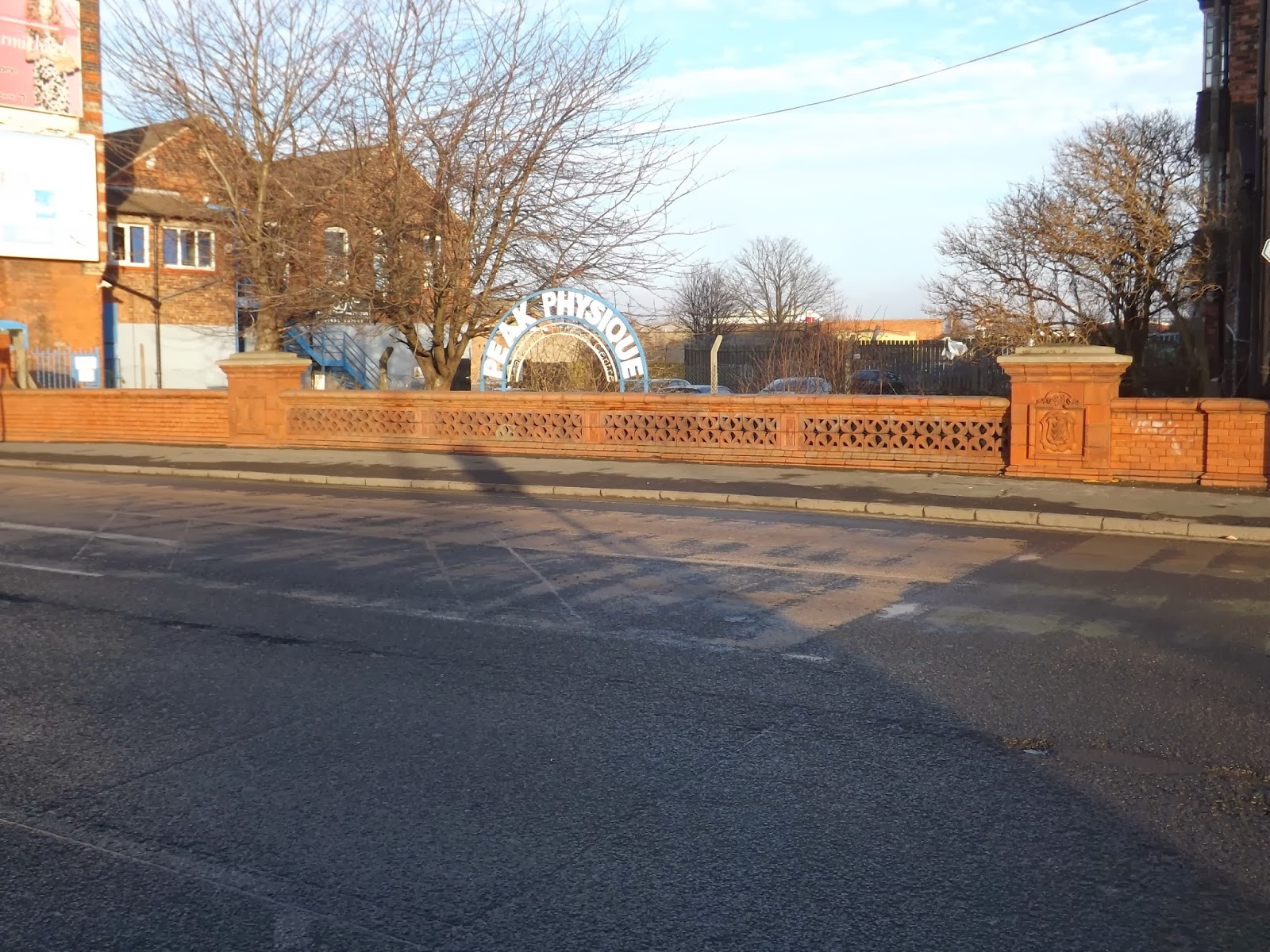
 Detail of a bridge pillar with a shield with the Three Crowns Coat of Arms of Hull and a date scroll which looks to be 1903 which is at odds with the date on the plaque.

This is the side of the bridge looking East. The drain was filled in in the 1930's so I expect people at this busy junction don't realise they are on a bridge, let alone the first of it's type in Great Britain.


Saturday, 18 January 2014

Fact 2. Andrew Marvell Poet and MP. Son of Hull.

Andrew Marvell was not the inventor of American comic books. But a Metaphysical Poet and MP for Kingston upon Hull.

He was born to the east of Hull at Winestead. His Father, also Andrew, was the CofE Rector of that place. His son was born 31-Mar-1621. They moved to Hull when Senior got taken on as lecturer at Hull Trinity Church.

St. Germain's Church, Winestead
St Germain's Church Winstead. Andrew Marvell was christened here.
http://www.geograph.org.uk/photo/190330

Andrew attended the Hull Grammar School that was later also attended by William Wilberforce. He left for Trinity College Cambridge when he was 13 and got a BA degree. In 1642 he went on the 'Grand Tour'. It is thought that this may have been as tutor to a rich patron. He stayed abroad until 1647 so missing the Civil War and came back speaking French, Italian, Spanish, Greek and Latin.

In 1650 he became a tutor for the daughter of Lord Fairfax who had just stood down from commanding the Parliamentary Army. In 1653 he became tutor to Oliver Cromwell's ward. In 1653 he joined John Milton as Latin Secretary to Cromwell's Council of State. In 1659 he was elected as MP for Kingston upon Hull and served as such until his death. he was said to be a good MP as he kept his constituents well informed, and indeed he was one of the few MP's at that time to have a salary from his constituency. 

Andrew Marvell, NPG
Andrew Marvell.
http://www.andreazuvich.com/literature/a-ballad-calld-the-hay-markett-hectors/attachment/screen-shot-2013-03-18-at-20-23-55/

Politically he managed to tread a easy path. he was a protestant but not too hardcore. He also had some sympathy for Charles I writing in his poem 'Horation Ode' which was actually about Cromwell's return  from the campaign in Ireland,
He nothing common did or mean
Upon that memorable scene,
But with his keener eye
The axe's edge did try.

Nor called the Gods, with vulgar spite,
To vindicate his helpless right;
But bowed his comely head
Down. as upon a bed.

He was better known for his satirical and political prose during his lifetime and became very weary of the corruption of the court after the reinstatement of the Monarchy.

He died suddenly in Hull and it was thought at the time that he may have been poisoned by those who he ridiculed in his pamphlets and books. He is buried in London.

He was well loved by the people of hull and they raised a monument to him at his grave. Part of the inscription reads;

Near this place lyeth the body of Andrew Marvell Esq., a man so endowed by nature, so improved by education, study and travel, so consummated by experience, that, joining the peculiar graces of wit and learning, with a singular penetration and strength of judgement, and exercising all these in the whole course of his life, with an unutterable steadiness in the ways of virtue, he became the ornament and example of his age, beloved by good men, feared by bad, admired by all, thought imitated by few; and scarce paralleled by any.

That is not a bad inscription and is the longest sentence I have ever written!

He started writing his poetry when he was at Cambridge but was not known for it until after his death. he was grouped with the metaphysical poets who used wit and simply rhyming forms, along with images and references to topical scientific and geographic discoveries, with very unusual similes and metaphors to examine moral issues such as religion and morals. Others included John Donne, Henry Vaughan and Richard Crashaw.

A statue of Andrew Marvell stands in the square outside Holy Trinity Church and Hull Grammar School.
Andrew Marvell statue in Trinity Square, Hull.
http://tonyshaw3.blogspot.co.uk/2010/08/andrew-marvell-and-kingston-upon-hull.html

A new Foundation School has been built, sponsored by the Cooperative Society, in Barham Road, Hull.

The new Andrew Marvell School.
http://buildingourfuture.org.uk/wp-content/uploads/2011/11/andrew-marvell.jpg

Perhaps his most famous poem is 'To his Coy Mistress'. This is just the first part;

Had we but world enough, and time, 
This coyness, Lady, were no crime
We would sit down and think which way
to walk and pass our long love's day.
Thou by the Indian Ganges' side
Shouldst rubies find: I by the tide
Of Humber would complain. I would
Love you ten years before the flood,
And you should, if you please,refuse
Til the conversion of the Jews.


Monday, 13 January 2014

Fact 1. Birth of Hull.


Believe it or not, Hull is a new town!

First there was Meaux Abbey that was set up by the monks from Fountains Abbey in 1151. After financial troubles they got going with draining the land around and grazed sheep on the land. The land was marshy with slight hills left over from the end of the ice age. They did so well with their sheep that they need some how to get their wool to market.

Nearby was a river that rose in the Wolds East of Driffield, the River Hull. The name may be derived from the Anglo Saxon for hill, but also may come from Hebrew, or the like, for circular, writhing, whirling motion or dance! The Monks decide that the river could be used to take their produce down to the Humber Estuary where it could be shipped onwards. It seems that there was a collection of a few houses here called Wyk or Wyke. By 1193 the place was developed enough for them to be exporting 45 sacks of wool.

A hundred years later Edward I lit upon the place as being useful to him. Edward was known as 'Longshanks' as he was tall for his age. Depending where you come from will also colour your thinking of him as he subjugated the Welsh and also fought many battles over Scotland. It was the later that made Wyke attractive to him as it was far enough away from the Scottish so as not to be regularly or easily raided, but close enough for it to be used as a useful supply base. In 1293 he 'bought' it from the Monks of Meaux. The Monks had fallen on hard times and they were only to happy to palm off Wyke for the price of the debt plus a bit of a land swap. One was the gift of money for the establishment of a chapel in Elstronwick, to the east. Over thirty years the monks got far away from the ideals of being a monk, and the place was closed down. Meaux itself was dissolved in the reformation by Henry VIII in 1539 and the stone was used to help build the defences on Hull.

Wyke became Kings Town upon Hull and he must have done quite well out of it as by this time there were about 60 dwellings and the wool export had increased to 4270 sacks of wool. They also imported most of the wine for the north of England. The place was governed by his men with the customs man being the most important.

By 1299 Edward had granted the town a 15 day fair and a market twice a week. They had also been declared a borough. The buildings were built largely on a grid as it was built from scratch. In 1300 a Mint was set up in Hull and there are a few pennies still surviving even though it didn't stay open long.
1321 defences were licenced and walls were built around three sides, except along the River Hull. In 1440 the city became self governing with a mayor etc.

By the time Henry VIII arrived he also realised the importance of Hull and gave orders for the the defensive walls to be improved and also a fortification to be built on the east bank of the River Hull to protect the river mouth and port. This was completed in 1543.

in 1897 the place became a city.

In 2010 the population was 302,296.


File:Wenceslas Hollar - Hull.jpg
Kingstown upon Hull before 1677.
By Wenceslaus Hollar 1607-1677.

Using the scale on the picture above it can be seen that the extent of the town was about 0.6 x 0.4 miles.

File:Hull map.jpg

Map showing expansion of Hull.

The original part of Hull in the present day still has many old buildings and hints to the past.